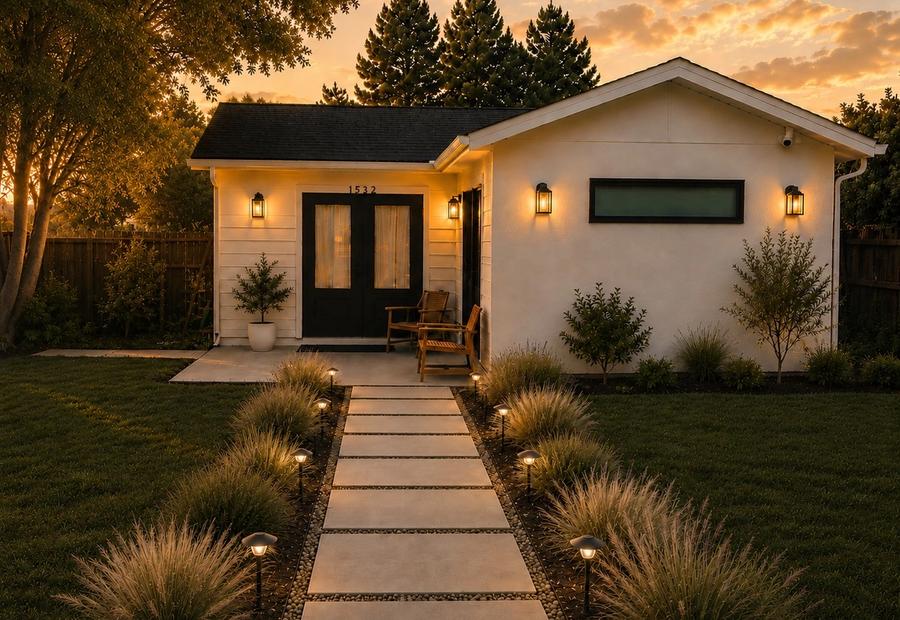
Most home improvements cost you money and give you back enjoyment. An ADU is one of the rare ones that can do the opposite — give you enjoyment and pay you back every month. But "can" is doing a lot of work in that sentence. Whether an ADU is actually profitable comes down to a few numbers, and the good news is they're not hard to run.
The three ways an ADU makes you money
- Monthly rental income. The most direct return: a long-term tenant or a short-stay suite generating cash every month.
- Property value. A permitted, well-designed second dwelling adds appraisable value to your lot — equity you keep whether or not you ever rent it.
- Flexibility you'd otherwise pay for. Housing a family member, replacing an office you rent elsewhere, or avoiding a future move all have real dollar value, even when no rent changes hands.
These numbers are a model, not a promise
The worked example below uses round, illustrative figures to show the shape of the math. Your rents, your build cost, and your financing will differ. Plug in your own numbers — the framework holds.
A worked example
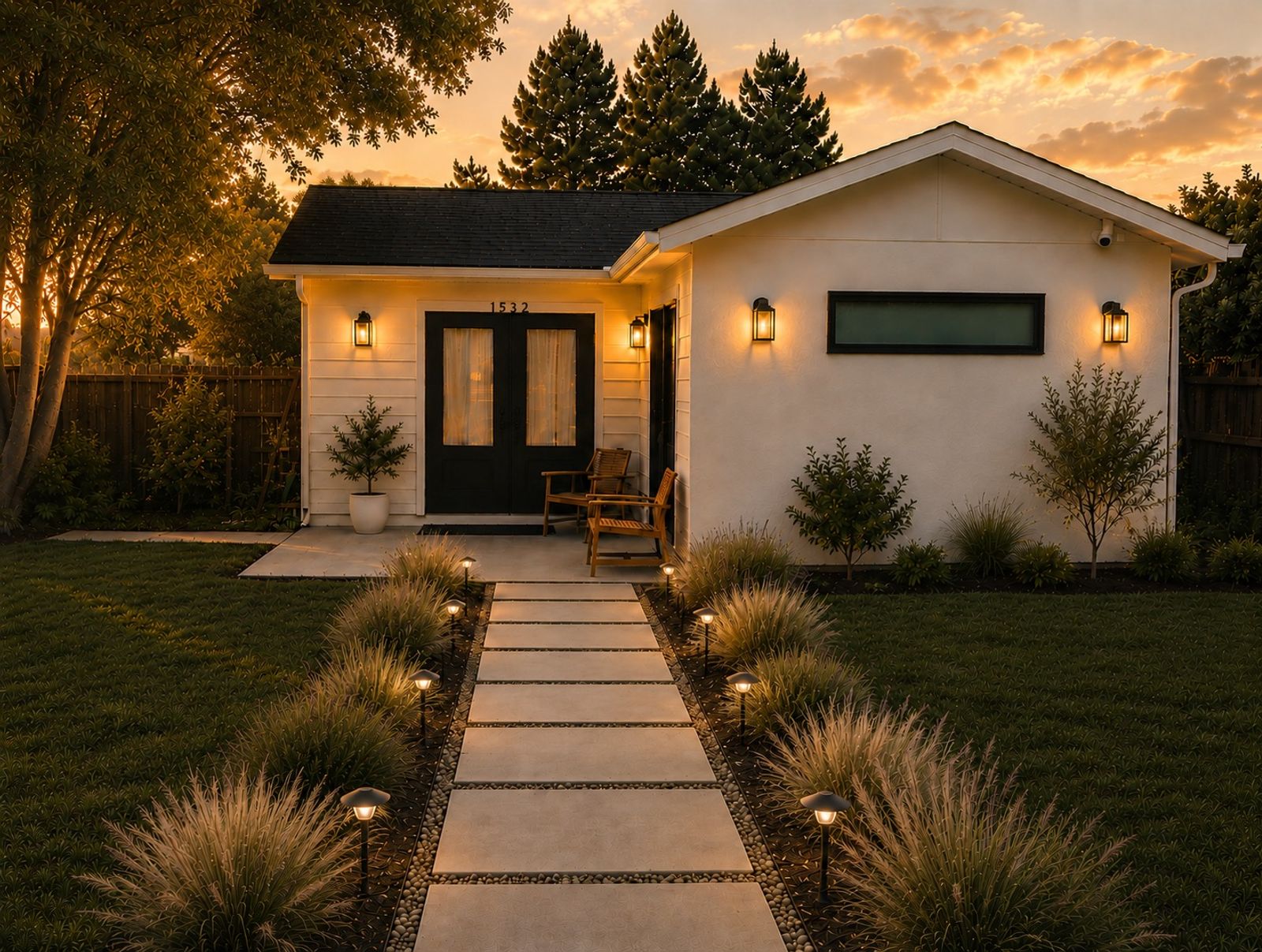
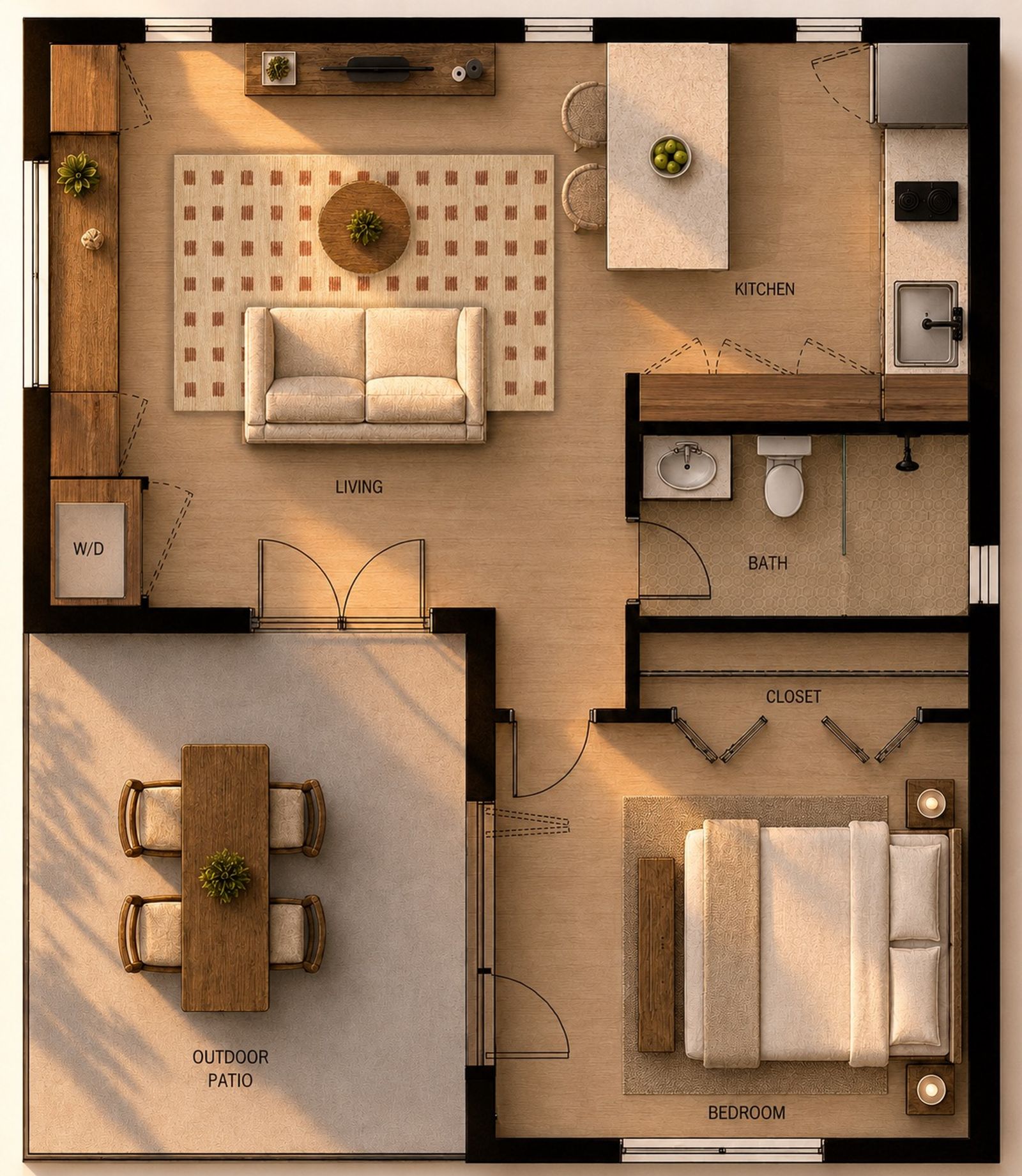
Let's walk a realistic detached ADU from cost to cash flow. Imagine an 750-square-foot unit that costs $300,000 all-in to build, in a market where a one-bedroom like it rents for $2,200 a month.
Illustrative annual cash flow for a $300k ADU renting at $2,200/mo
| Line | Monthly | Annual |
|---|---|---|
| Rental income | $2,200 | $26,400 |
| Operating costs (insurance, maintenance, utilities) | −$350 | −$4,200 |
| Net before financing | $1,850 | $22,200 |
| Construction loan payment (illustrative) | −$1,500 | −$18,000 |
| Net cash flow | $350 | $4,200 |
Two things jump out. First, even while paying off the loan, the unit is cash-flow positive — the tenant is buying you an asset. Second, the real return shows up once the loan is paid: that same unit then throws off roughly $22,000 a year in net income, on a property you already owned.
Payback period: the number that matters
If you pay cash instead of financing, the question becomes how fast the rent returns your investment. Using the example above — $300,000 to build, ~$22,200 net per year — the simple payback lands around 13 to 14 years. After that, the income is gravy for as long as you own the home. Cut the build cost or raise the rent and that timeline shortens quickly:
Simple payback period at different cost and rent levels
| Build cost | Net annual income | Approx. payback |
|---|---|---|
| $180k (conversion) | $18,000 | ~10 years |
| $300k (detached) | $22,000 | ~13–14 years |
| $300k | $30,000 (higher-rent market) | ~10 years |
| $450k (premium) | $26,000 | ~17 years |
Don't forget the equity
Cash flow is only half the return. A permitted ADU typically raises your property's value — often by more than a simple income calculation suggests, because appraisers and buyers both value the optionality of a second unit. Many homeowners find a well-built ADU adds value on the order of what it cost to build, sometimes more in supply-starved markets. That means a chunk of your investment is recovered as equity the day the unit is finished, before the first rent check ever arrives.
How to make the numbers work harder
- Match the unit to your market. A flexible one-bedroom rents to the widest pool. Know what your neighborhood actually pays before you size the build.
- Design for the premium, not the discount. The same square footage, well laid out and full of light, rents faster and higher. Good design is the highest-ROI line in the budget.
- Consider a mid-term or furnished strategy. Furnished rentals for traveling professionals can lift monthly income meaningfully where regulations allow.
- Control the build cost where guests don't look. Spend on the kitchen, the bath, and the light; save on the things no tenant ever notices.
- Keep it permitted. Unpermitted units can't be appraised, insured, or rented with confidence — and they cap your resale value instead of adding to it.
An ADU is one of the only things you can add to a home that earns its keep. The question isn't really whether it pays — it's how well you design it to.
Run your own numbers
The math above changes a lot with your specific lot, market, and design. A feasibility review pins down your real build cost and your realistic rent — the two inputs that decide everything else. From there the payback period writes itself.
Profitability is ultimately a design question as much as a financial one. The unit that rents fastest and holds its value longest is the one that feels like a real home. Which brings us to the last piece: how a project like this actually gets built, step by step.